
What to Wear Running: A Women's Running Outfit Guide
, by Gilded Grace, 3 min reading time
, by Gilded Grace, 3 min reading time
The right running outfit keeps you cool, chafe-free, and supported mile after mile. Here's how to dress for any run — by temperature — from sports bra to shorts to layers.
What you wear running can be the difference between a run that flies by and one you cut short because of chafing, overheating, or a bra that won't stay put. The right running outfit manages sweat, supports you through every stride, and adapts to the temperature.
Here's how to dress for any run—built from the inside out and broken down by weather.
Running is high-impact, full stop. Your sports bra is non-negotiable: choose a firm band and a secure, encapsulating fit. The 99'er Padded Sports Bra locks you in with a crossover hexagonal back, so bounce and discomfort never break your rhythm. (See our full sports bra guide to dial in the fit.)
For most runs, lightweight shorts win on breathability and range of motion. The high-rise Sheva High Rise Running Shorts are purpose-built for the road, while the ultra-stretchy Excel Workout Shorts add a little extra coverage. When it's cold, switch to the full-length Go Again Legging for warmth and muscle support.
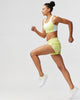
Less is more. A bra top or a light tank, running shorts, and a cap. Prioritize moisture-wicking fabric and airflow. Pair the 99'er bra with the Sheva shorts and a breathable tank.
The sweet spot. Shorts or capris with a short- or long-sleeve top you can push up. The Foudy Longsleeve Workout Top is ideal for these in-between temps.
Layer. Start with a long-sleeve base like the Foudy Mid-Weight 1/2 Zip Top, add leggings, and top with the lightweight Powerstripe Down Vest or the Powerstripe Track Jacket. Dress for about 10°F warmer than the thermometer—you'll heat up fast.
Dress as if it's 10–15°F (5–8°C) warmer than it actually is. You'll feel slightly cool for the first five minutes, then perfectly comfortable once you warm up. Overdressing leads to sweat-soaked layers that chill you later.
A supportive high-impact sports bra, comfortable moisture-wicking shorts or leggings, a breathable top, and proper running shoes. Keep it simple and focus on fit.
Shorts are cooler and offer more airflow for warm runs; leggings add warmth and muscle support in the cold. Many runners keep both and choose by temperature.
Choose seamless, moisture-wicking fabrics, make sure your gear fits snugly (loose fabric rubs), and apply anti-chafe balm to hot spots before long runs.
Layer a moisture-wicking long-sleeve base, insulating leggings, and a wind-resistant vest or jacket. Add gloves and a headband, and shed layers as you warm up.
Dial in your support, match your layers to the temperature, and choose moisture-wicking fabrics, and every run gets more comfortable. Build your running kit at Gilded Grace.