
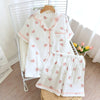
How to Choose Sleepwear That Actually Helps You Sleep Better
, by Gilded Grace Editorial, 4 min reading time
, by Gilded Grace Editorial, 4 min reading time
The wrong pajamas wake you up at 3 AM. The right ones improve sleep quality more than any sleep app. Here's how to choose fabrics, fit, and style that actually support better rest.
The pajamas you sleep in have a measurable effect on sleep quality — one of the largest of any single factor you can change. The wrong fabric traps heat, restricts movement, or wicks moisture badly, fragmenting your sleep cycles. The right pajamas help your body regulate temperature, stay comfortable through every position change, and signal "sleep time" to your brain. Here is how to pick yours.
Sleep scientists have long established that core body temperature drops slightly during sleep. Your body actively cools itself by dilating blood vessels in the skin and releasing heat. When pajamas trap that heat (or worse, you sleep in synthetics that don't breathe), the body has to work harder, sleep fragments, and you wake more often without remembering it.
The right fabric supports this thermoregulation. The wrong one fights it all night.
Pros: Breathable, soft, affordable, machine washable.
Cons: Absorbs sweat and stays wet (uncomfortable for hot sleepers).
Best for: Cool sleepers, moderate climates, year-round basic pajamas.
Look for: Long-staple cotton (Pima, Egyptian, Supima). Higher thread counts don't matter as much as the staple length.
Pros: Exceptionally soft, naturally cooling, moisture-wicking, antibacterial.
Cons: Wears out faster than cotton (~2 years vs 5). Some processing is chemically intensive.
Best for: Hot sleepers, sensitive skin, hot climates.
Pros: Most breathable natural fiber. Wicks moisture better than cotton. Improves with age.
Cons: Wrinkles dramatically (most people don't care for sleepwear). Stiffer than cotton.
Best for: Very hot sleepers, hot summers, beach climates.
Pros: Temperature regulating (warm in winter, cool in summer), antimicrobial, gentle on skin and hair.
Cons: Expensive, dry-clean only or careful hand washing, can stain.
Best for: Special-occasion wear, sensitive skin, hot flashes, hair preservation.
Pros: Plant-based, softer than cotton, holds shape, breathable, eco-friendlier processing than viscose.
Cons: Mid-tier price, less durable than premium cotton.
Best for: Year-round comfort, eco-conscious shoppers.
Pros: Temperature regulating across wide range, odor-resistant, soft (fine micron grades).
Cons: Pricier, longer drying time, allergy concerns for some.
Best for: Cold sleepers, outdoor sleepers, camping pajamas.
You can absolutely sleep in T-shirts and athletic shorts. But there's a behavioral reason to have dedicated sleepwear:
Bamboo or silk. Wicking layers (technical sleepwear from brands like Cool-jams or DAGSMEJAN). Consider cooling sheets and pillowcases too.
Cotton or bamboo only. Wash separately in fragrance-free detergent. Replace pillowcases every 2–3 nights.
Flame-resistant or snug-fit (US safety regulations). Look for cotton or modal. Skip costume-style PJs as everyday wear.
Wrinkle-resistant fabrics (modal, bamboo). One set that works for multiple climates. Roll, don't fold.
Pajamas are part of a system. The biggest sleep upgrades:
Browse our sleepwear and loungewear collection for pajamas, robes, and lounge sets designed for genuinely restful sleep.